
B₹250
Bills
UPI · 12 Sep
RequiredOptionalImpulsive
Required
Rent, EMI, the electricity bill. You’d pay it in any mood, so tagging it is quick and there’s nothing to think about.
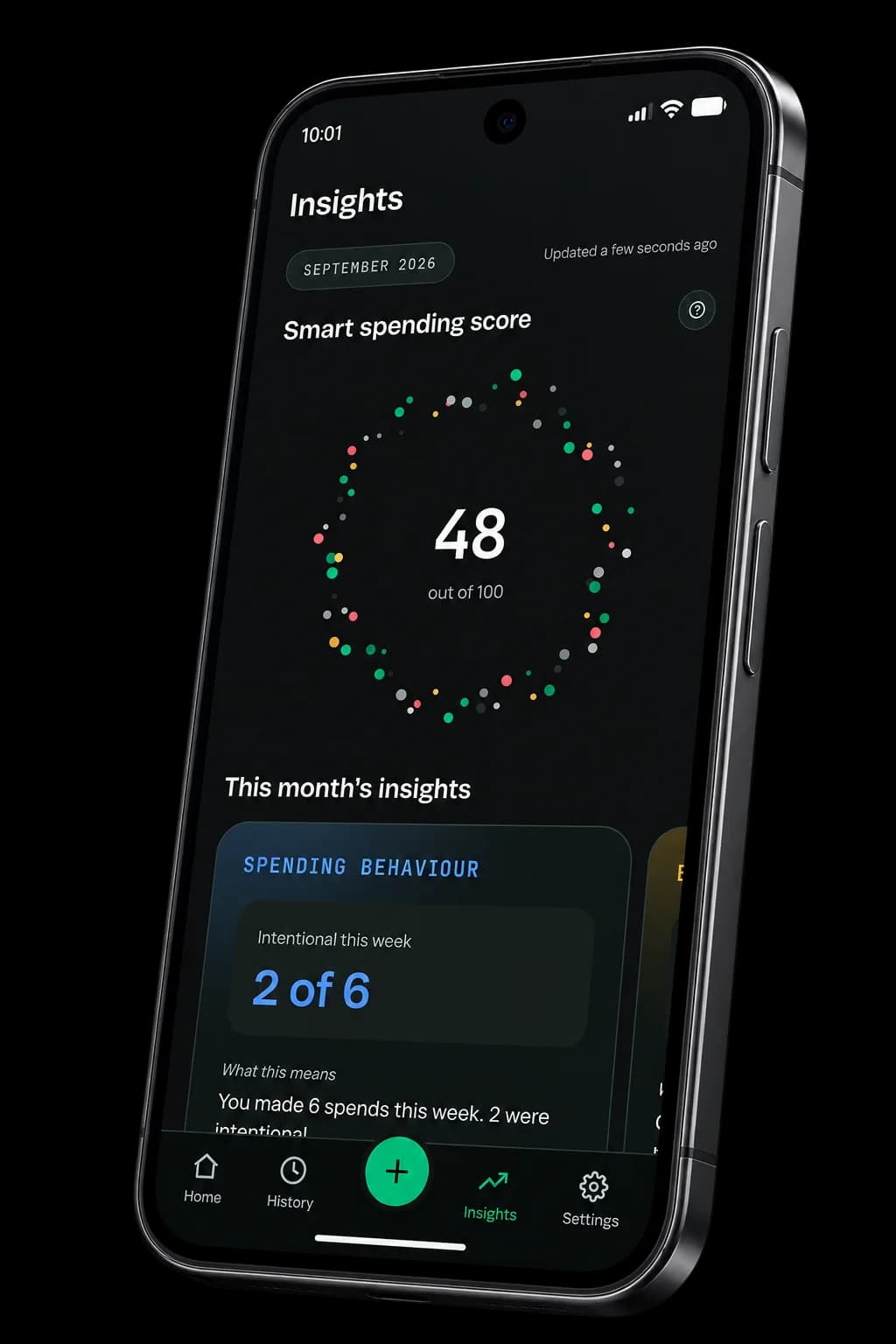
Every time you log a spend in Spenrol, you tag it required, optional or impulsive. It takes one tap and the app never decides for you. Over a month, those tags become a Smart Spending Score and a breakdown of how much of your money went on things you'd skip.
Shopping
UPI · 10 Sep · “50% off on bag”
74%
of UPI users say they spend more since they started paying by phone. IIIT Delhi, 2024
Say your tracker shows ₹2,400 on food this week. That could be one big grocery run. It could also be seven late-night orders you barely remember placing. The total is the same, and it tells you nothing about which week you just had.
Paying by UPI makes the second kind of week easy. There's no cash leaving your wallet and no card slip, just a scan and a PIN, so a ₹350 order doesn't feel like a decision.
Spenrol adds that decision back after the fact. When you log the payment, you say whether it was required, optional or impulsive. By the end of the month you know how much of that ₹2,400 was the grocery run.
Bills
UPI · 12 Sep
Rent, EMI, the electricity bill. You’d pay it in any mood, so tagging it is quick and there’s nothing to think about.
Transport
UPI · 12 Sep, 9:58 am
A dinner out you planned, a birthday gift, a subscription you do use. You didn’t need it, but you chose it.
Shopping
UPI · 10 Sep · “50% off on bag”
The 11pm Zomato order, the “just this once” add-to-cart. Tagging it won’t undo the spend. It does mean you’ll see the fourth one coming.
SMS-based trackers like axio (formerly Walnut), MoneyView and FinArt read your bank messages and file each payment under food, shopping or travel. That's quick, but the app doesn't know why you spent, and it never asks.
Manual ledgers like Money Manager and Monefy have you pick the category yourself. You're already stopping to log the spend, but the app still only asks where the money went.
Spenrol asks one more thing at the same moment: did you plan this? That's the question that tells you whether next month will look the same.
Start tagging this week
Free on Android. No SMS access, no card required.
Something else? Write to [email protected]
It doesn't guess. You tag each transaction required, optional or impulsive with one tap. Spenrol never infers it from the merchant, the amount or the time of day, because only you know whether that 11pm order was planned.
A score from 0 to 100 for the month, calculated from your tags. The more of your spending you tag impulsive or optional, the lower it goes, and going over budget also pulls it down. Untagged transactions don’t count.
Not the ones we've compared. Money Manager and Monefy ask for a category. SMS-based apps like FinArt, axio and MoneyView fill in the category for you. None of them asks whether you planned the spend.
The app doesn't comment on your tags or send you warnings about them. You're writing down what happened, and the score is only visible to you. Most of the value comes from the few seconds of thinking before you tap.
Yes. Free on Android, no ads, no paid tier.
That's the plan. We're working toward a UPI licence from NPCI so Spenrol can show your budget at the moment you pay. It isn't in the app yet. Tagging and the Smart Spending Score are what's live today.
“Being able to classify expenses as Required, Optional, or Impulsive makes it easier for me to understand my spending habits. It also makes me think twice before spending on something impulsively.”
Free on Android. No SMS access, no bank login.

Scan to download on your phone